Geminorum-F Fauna - The Gbahali
Geminorum-F is a rather special planet which is currently in a phase of desertification resulting from a Pangea. On this planet, vertebrates are becoming rare, supplanted by arthropods and invertebrates which have adapted more quickly to new ecosystems. But despite this, there are still some large vertebrates, including a predator that is one of the largest that this planet has known: The Gbahali!
This large Desert Reptile was so baptized by Exonaturalist of the expedition, of Congolese origin, who thought it looked like a creature from the legends of West Africa.
Its thick and robust skin and scales protect it from the intensity of the sun and offer it good protection against the pincers and talons of its prey (sometimes tougher than it).
The Gbahali is a solitary predator, 60 to 100 cm high at the withers, which functions like a bear by having a large hunting territory which intersects with each other. Mainly carnivorous, it hunts all kinds of prey, excluding the larger ones. Its beak and claws help it to break the solid shells of the arthropods it hunts.
Although imposing, it is incredibly fast, being able to exceed 50km/h, even in the sand dunes.
Thanks to its size, the Gbahali has very few enemies, but its eggs are easy prey for many opportunistic predators. This is why the females carefully protect them, while being herself protected by a male, harem leader, who watches over the many females in his territory.
Note from the explorers: “Day 16 since orbiting Geminorum-F and first morning after our science capsule landed. We were attacked by a kind of large local reptile who watched us from afar for several minutes before charging us, mouth wide open. The animal is more or less the size of an “undomesticated” tiger, with a fairly similar musculature. Clearly, if Markus hadn't put him to sleep with several tranquilizer darts, the injuries among our group would have been very serious. »
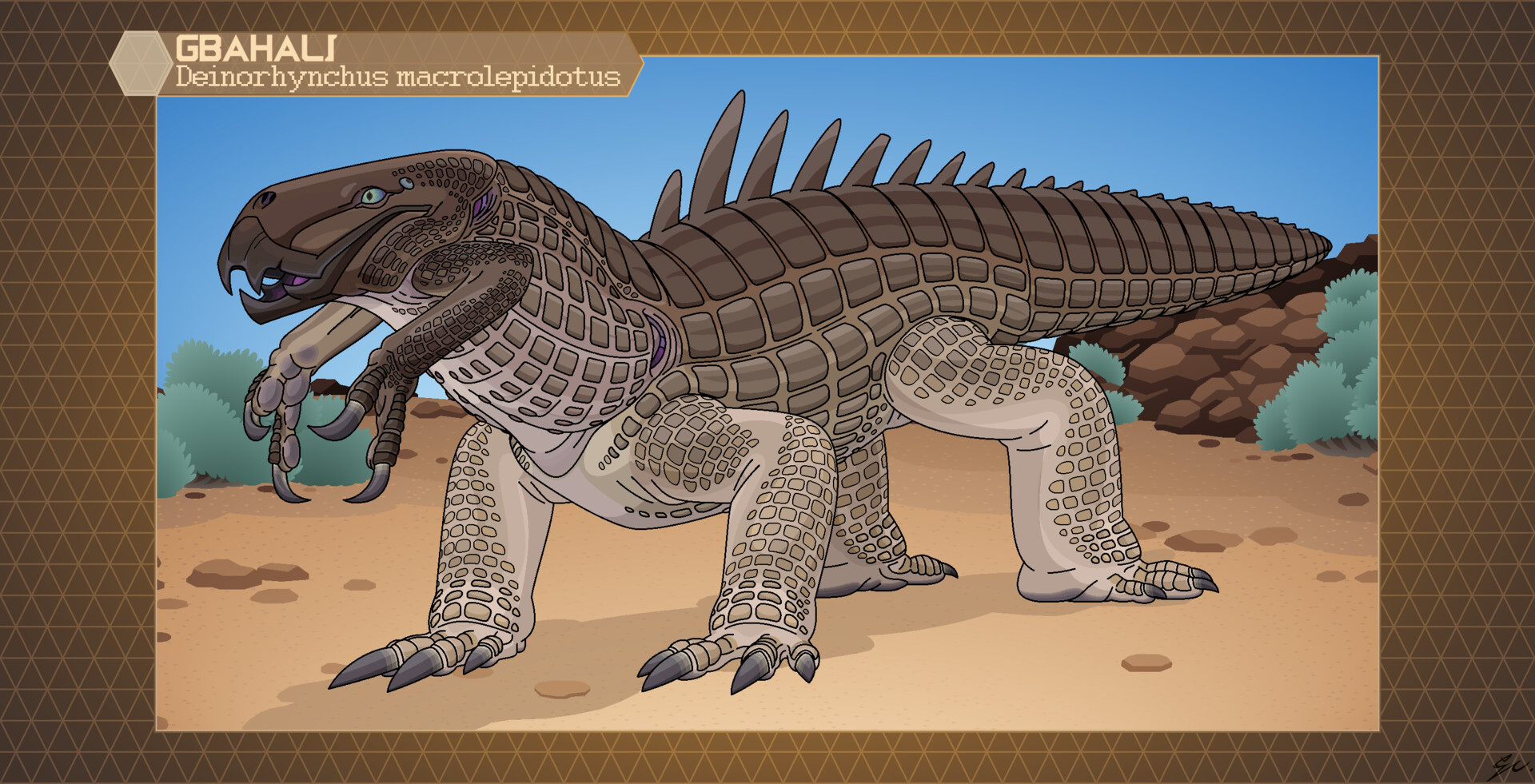
The Gbahali or Deinorhynchus macrolepidotus
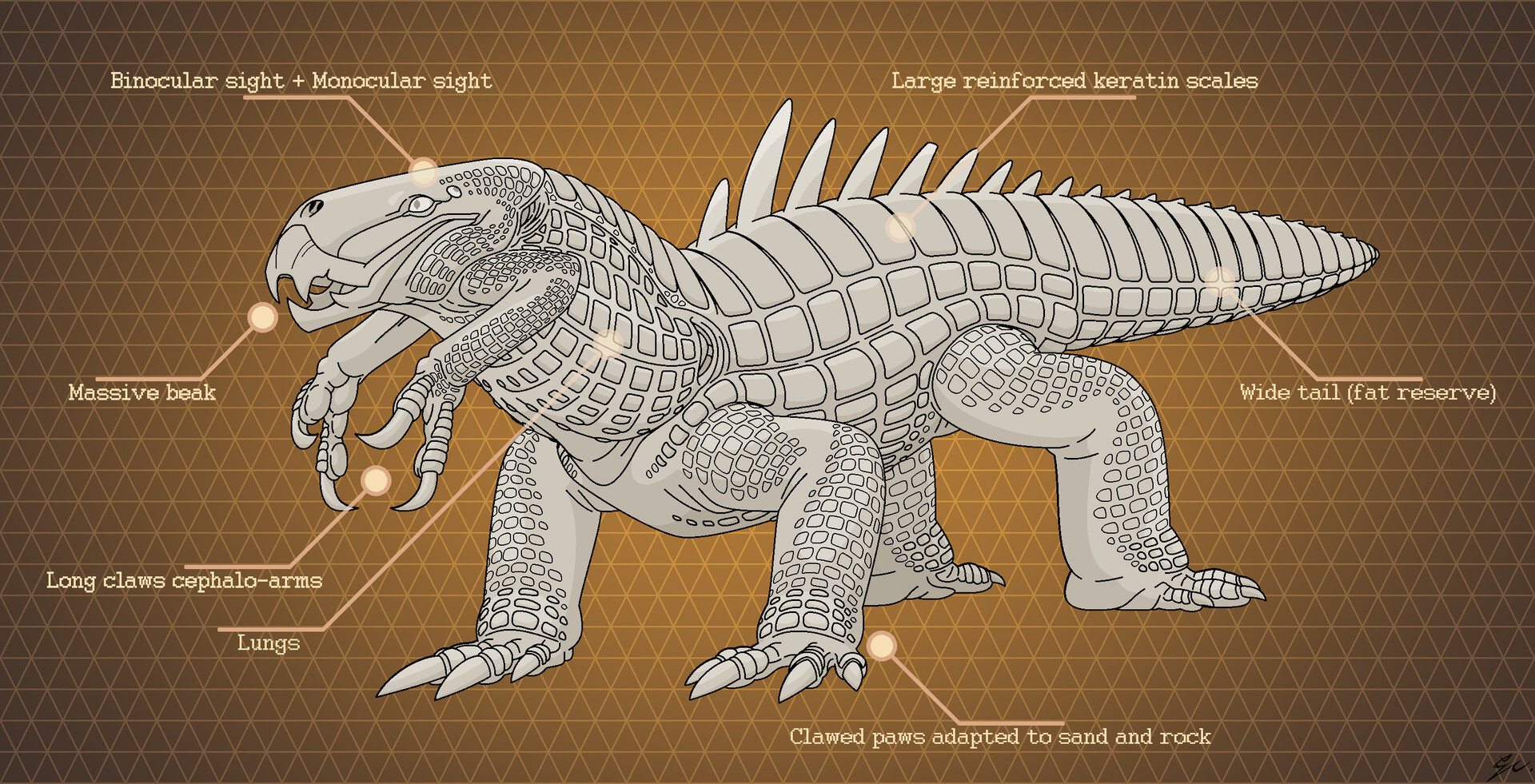
The Gbahali - extern anatomy
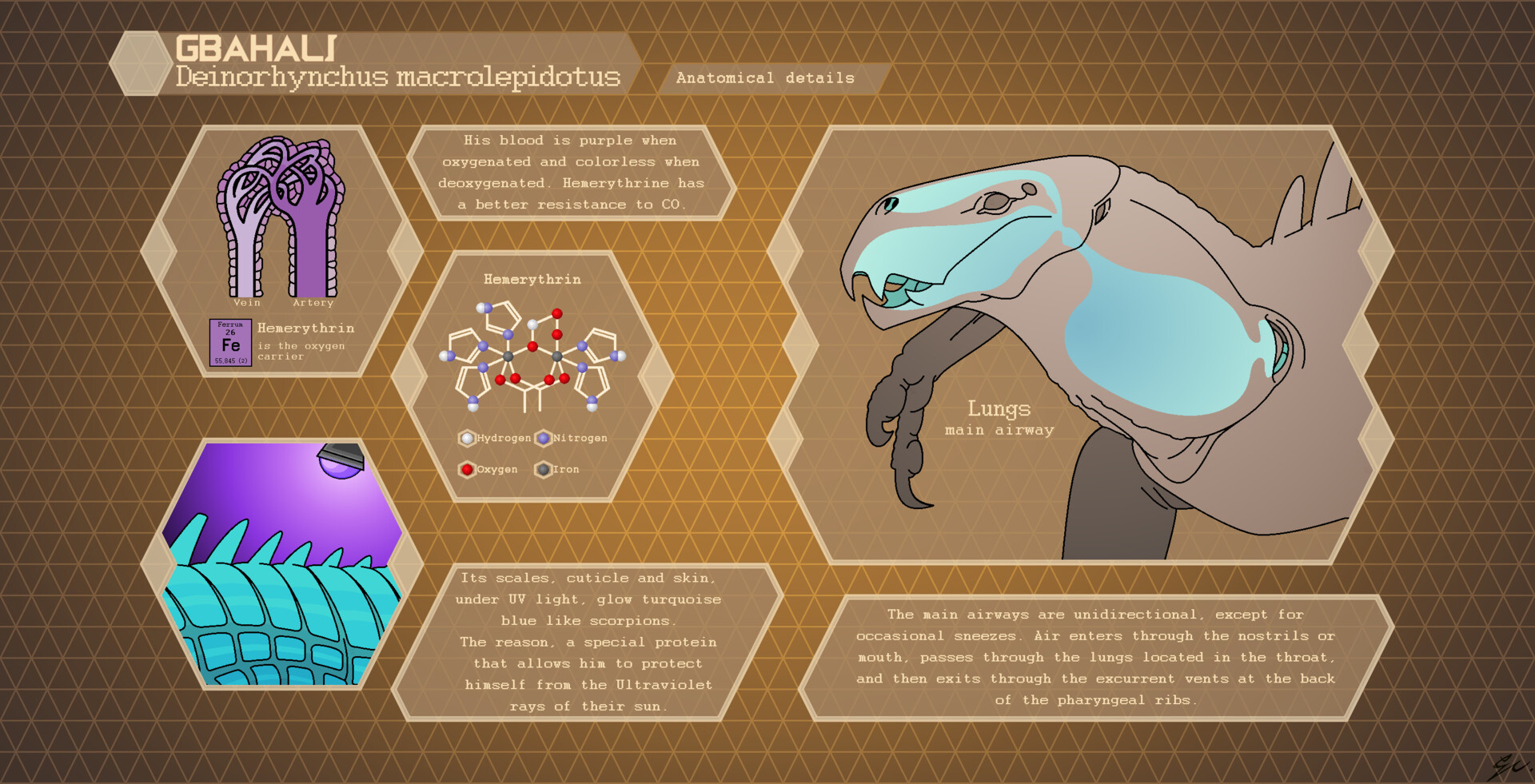
The Gbahali - anatomical details